
In Memoriam: Professor Alexander Tzagoloff
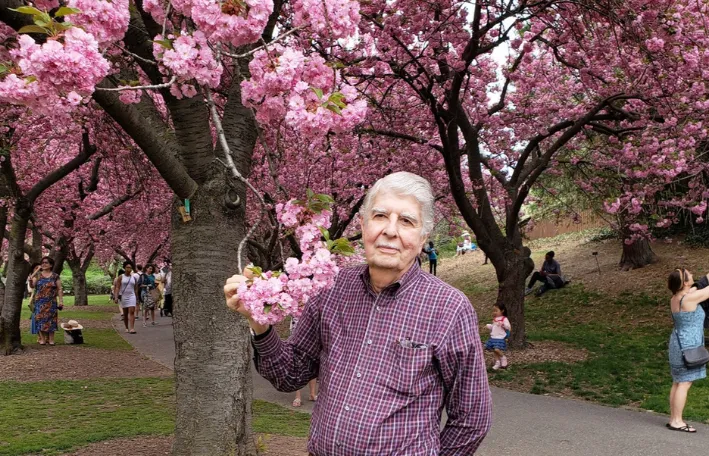
Our dear colleague Professor Alexander Tzagoloff passed away peacefully on Monday. He is survived by his wife Helen and daughters Natasha and Lydia, and will be greatly missed by all who were influenced by his remarkable and impactful life and career.
Dr. Brent Stockwell, Chair of the Department of Biological Sciences, writes:
“Alex and his family were immigrants, moving to the U.S. in 1949. Alex was a true Columbian, as he did his undergraduate studies at Columbia and then received his PhD in biochemistry in 1962, also from Columbia. He was then a postdoctoral researcher with David Green at the University of Wisconsin. In 1977, he came back to us and joined Columbia as an Assistant Professor, rising through the ranks and retiring in 2020.
Throughout his career, he studied how mitochondria function in the yeast Saccharomyces cerevisiae. He was the first to sequence the complete set of mitochondrial genes and to identify loss of function mutations in mitochondrial DNA. He did a great deal of other pioneering work on mitochondria, including finding introns in yeast mitochondrial genes, defining many nuclear genes that function in mitochondria, and defining mechanisms of human mitochondrial diseases.
Alex wrote a popular book on mitochondria, named, not surprisingly, Mitochondria, first published in 1982. He received the Alexander von Humboldt Award (1999) and the Thomas Hunt Morgan Medal (in honor of another great Columbian) in 2010 for his lifetime contribution to genetics, specifically his work on mitochondrial genetics.
Image Carousel with 7 slides
A carousel is a rotating set of images. Use the previous and next buttons to change the displayed slide
-
Slide 1: Image credit: Leticia Veloso R. Franco
-
Slide 2: Image credit: Leticia Veloso R. Franco
-
Slide 3: Image credit: Leticia Veloso R. Franco
-
Slide 4: Image credit: Leticia Veloso R. Franco
-
Slide 5: Image credit: Leticia Veloso R. Franco
-
Slide 6: Image credit: Leticia Veloso R. Franco
-
Slide 7: Image credit: Leticia Veloso R. Franco
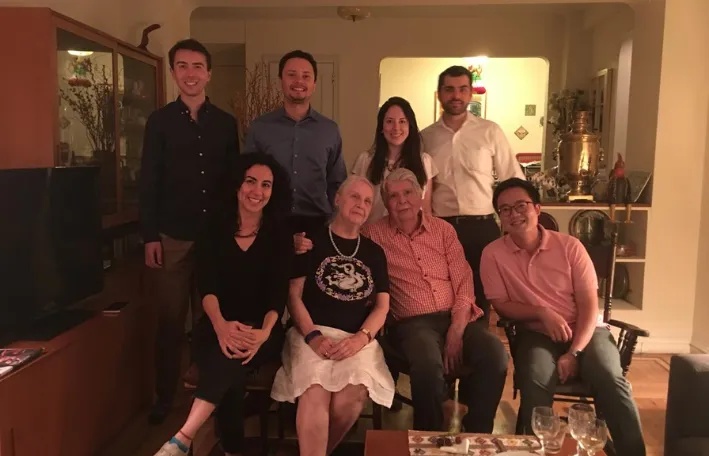
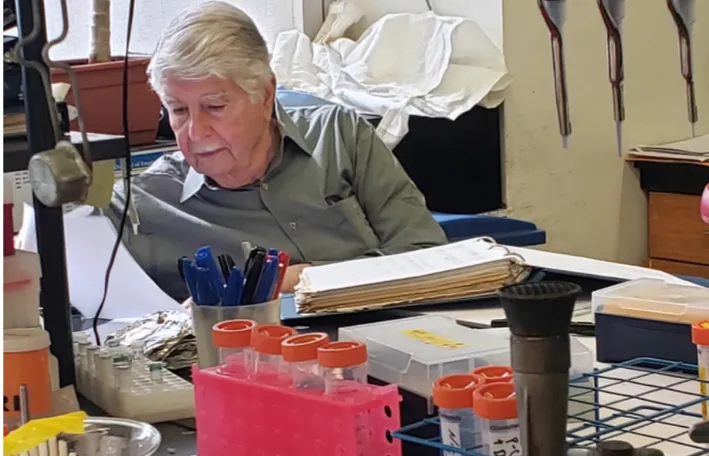
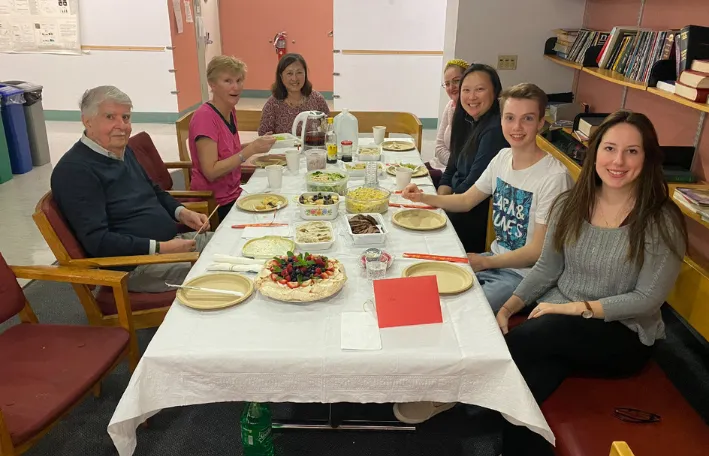
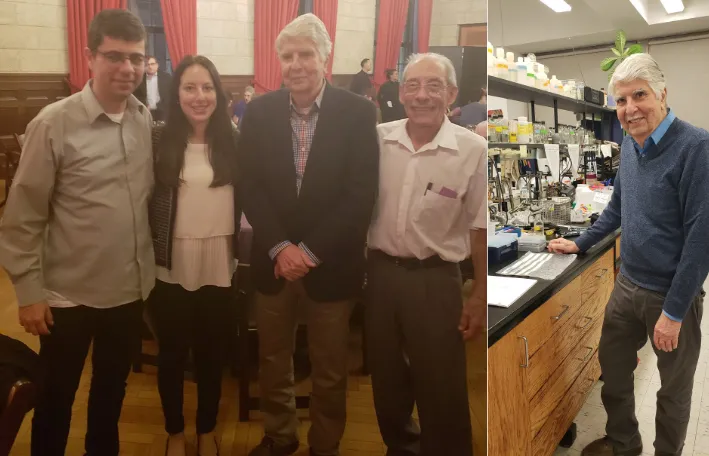
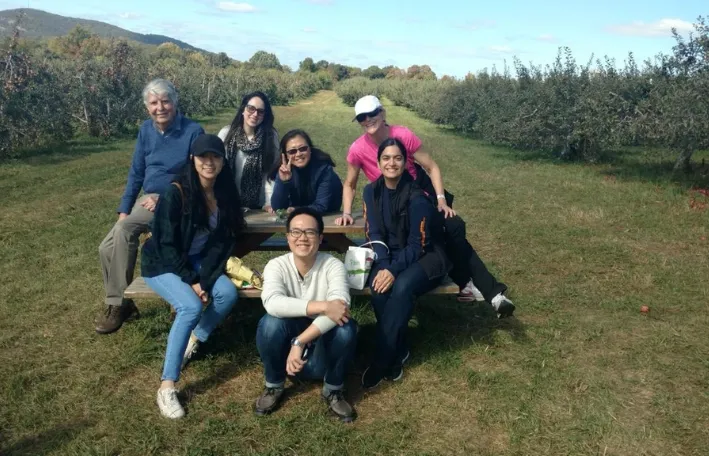
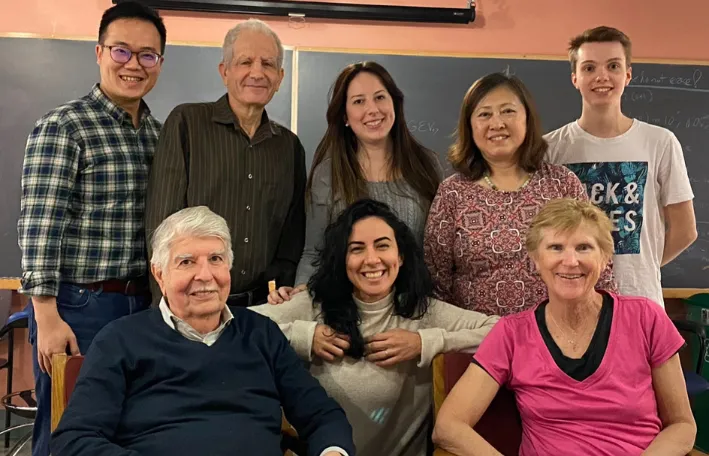
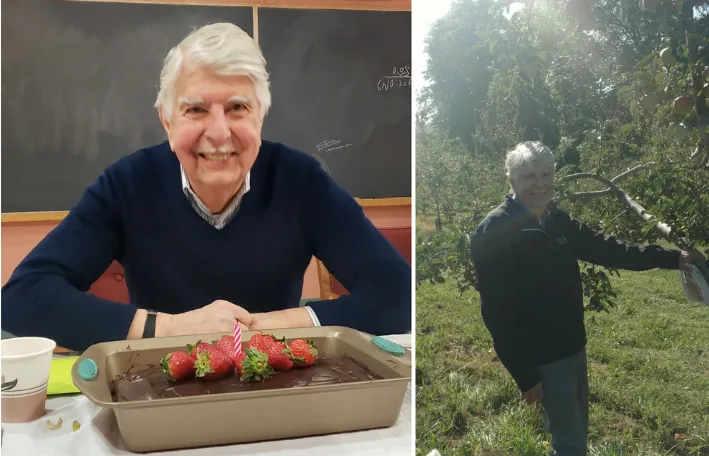
Alex was a role model for his mentees. As one of his students said, Alex was a the “consummate hands-on biochemist.” He was generous, sharing his mutant strains with labs around the world. As one of the nominators for his Morgan Prize wrote, “He never tried to secure this field for himself and graciously provided reagents that enabled us to enter the field.” Another of his students said to Alex, “Your pacing, delivery, the energy, and the humor you brought to your teaching enabled you to engage the students as they learned some very difficult material. Yours is a standard I still try to achieve.” Many other former trainees have commented how Alex changed their lives and helped them become scientists, launching their careers, one saying, “Alex, you will likely never fully realize the impact you have had on all of our lives.” Alex was truly a research pioneer in mitochondrial biology and a treasured member of our community. His impact continues to felt around the world by all of his trainees and the next generation that they have trained. He lived a wonderful life, impacting so many and bringing such important knowledge to the world.
In recent years, a generous donation to our department made in his honor resulted in a major expansion of the department’s graduate student travel fund, ensuring that future students would have greater opportunities to share their work and engage with the global scientific community.”
After Alex was awarded the 2010 Thomas Hunt Morgan Medal, Dr. Carol Diekmann, Professor of Molecular and Cellular Biology, as well as Professor of Chemistry and Biochemistry at The University of Arizona wrote admiringly of his life’s work for Genetics. But the history of Alex's scientific career, she writes, “does not include the human element.”
First, Alex works in the lab almost every day. I call occasionally, and though I try the office number first, I know I will have to dial the lab number to reach him. He works quickly, accurately, and intensely. I have a vivid memory from the “sequencing era” of him loading six sequencing gels in succession on his lab bench across from mine, working from left to right down the bench, loading samples with a Hamilton syringe and switching on the power supplies as he went… Since I left in 1984, Alex has been supportive of my research, reading and commenting on grants and manuscripts, sending strains and antibodies, and chatting about experiments.
She also writes about him as a thoughtful mentor. “When I just arrived in New York from California, Alex went with me to see the dragon lady who governed all of Columbia housing, because he knew she would initially give me bad choices for apartments. I did not know I should not accept an apartment with a street entrance […] even though the inside looked fine.”
Diekmann’s quotes colleagues who spoke warmly and with great fondness about Alex, and it seems fitting to end with their words, here.
From Toni Barrientos, University of Miami, another nominator for the Medal and former postdoc: “I remember when I started my Ph.D. in Barcelona, my boss gave me that book Mitochondria by Tzagoloff and told me “that is your bible; come to me when you have read it.” I never thought I would one day work with the author of that book. During my postdoc in Alex's lab, I understood what science was, coming from Alex's passion, and took him as a role model. I have never met a better global scientist.”
From Sharon Ackerman, Wayne State University and former postdoc: “Alex has an uncanny ability to look at a phenomenon, decide the most important questions to address experimentally, and formulate a cogent plan to do so.”
From Françoise Foury, University of Louvain, Belgium and former postdoc: “I deeply enjoyed my stay in New York in Alex's lab. I learnt mitochondrial genetics, purification of membrane proteins from the respiratory complexes, through subtle combinations of ammonium sulfate precipitations and deoxycholate treatments.”
Sharon Ackerman: “Alex drove me to a dog breeder in the boondocks of Connecticut (∼5-hr round trip) for me to purchase my first dog—a magnificent basset hound named Daisy, who was 6 months old, >60 lb, and had a sense of “kennel” about her (i.e., she stunk up his car), because I did not own a car during the period I worked in his lab.”
Françoise Foury: “I appreciated the extremely familial and friendly atmosphere of the lab headed by Alex. I was the first postdoc coming from a foreign country and coddled by Alex and his family. I will remember forever the first Christmas day spent with Alex and his family.”
And finally, I think all of us will agree with the short assessment by Alan Myers, Iowa State University, and former postdoc:
“Greatest guy of all time.”