
Columbia Researchers Uncover Secrets of Why Mosquitoes Bite (and How to Stop Them)
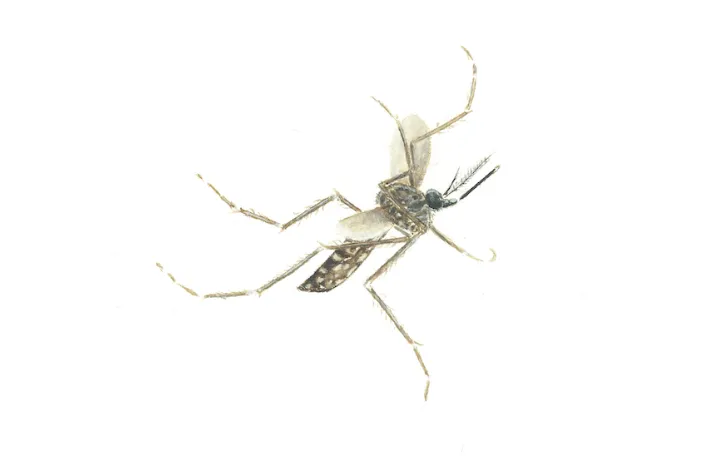
We all know a thing or two about mosquitoes. In fact, most humans live in areas inhabited by mosquitoes and about 40% of us live around the ones that transmit disease. The worldwide abundance of these insects coupled with the virulence of mosquito-borne illnesses make them the number one killer of humans—more dangerous to us than snakes, sharks, and even other humans. Understanding mosquito behavior, specifically how and when mosquitoes bite us, can lead to clever prevention measures against these tiny, stealthy killers.
Mosquitos bite depending on the time of day. Most mosquito species are crepuscular, meaning they are most active at dawn and dusk. Often, the air is calmest at these hours, allowing for easier flights and straightforward detection of hosts via carbon dioxide, warmth, and skin odor. Other mosquito species hunt at different times to optimize for their environments. But scientists still don’t know how mosquitoes recognize the best time of day to bite.
Now, a recent paper in PNAS from the Duvall Lab led by graduate student Linhan Dong shows that mosquito feeding behavior is controlled by tiny clusters of neurons across the brain that regulate the insect’s circadian rhythm. The researchers also identified the neuronal signaling molecule responsible for the circadian regulation of feeding, which marks significant progress in our understanding of mosquito neurobiology and behavior.
Dong and his co-authors studied a specific species of mosquito called Aedes aegypti, which are found on all continents (except Antarctica) and can transmit dengue, Zika, and yellow fever. Field studies have shown that Ae. aegypti are indeed most active at dawn and dusk, but Dong and his team sought to precisely characterize how this cyclical behavior is generated.
To do so, they developed an entirely new way of interrogating mosquito blood-seeking behavior. Ae. aegyptibegin seeking hosts when they sense carbon dioxide from the breath of humans or other animals. Using the time mosquitos spend flying around after exposure to carbon dioxide as a measurement of blood-seeking behavior, the researchers created a custom behavioral arena, fit with automated carbon dioxide delivery, timed lighting to replicate day and night, and video tracking. Dong and his co-authors hypothesized that mosquitoes would be more prone to getting activated by carbon dioxide around the onset and offset of their controlled, artificial lights, behavior that would mimic their previously observed dawn/dusk activity in the wild.
Their experiments yielded a number of interesting results. First, the researchers found that even without carbon dioxide, the mosquitos were spontaneously awake and flying around at dawn and dusk. After puffing carbon dioxide at set points throughout their artificial day/night cycles and recording mosquito behavior, the researchers found that, surprisingly, mosquitos were extremely sensitive to carbon dioxide even throughout the daytime, but they quit their search for a host after just a couple of minutes. Only at dawn and dusk do mosquitoes continue searching for a host for over ten minutes. The combined increase in spontaneous flight and longer search times presumably make the insect most likely to find a successful blood meal at dawn and dusk.
Furthermore, at night, the mosquitoes were almost completely insensitive to carbon dioxide, suggesting that separate mechanisms prevent the mosquitos from biting at daytime versus nighttime. During the day, despite being briefly activated by carbon dioxide, some mechanism must be suppressing the mosquito’s search for a host, while at night, the behavior is never activated in the first place.
Dong and his team then tried to figure out whether this regulation of host-seeking behavior was under the control of the mosquito’s circadian rhythm. To do so, they disrupted a type of neuronal signaling molecule called a neuropeptide, specifically pigment-dispersing factor, or PDF. Neuropeptides are special types of neuronal signaling molecules as they are not released for fast transmission of information and are therefore not considered ‘neurotransmitters.’ Rather, they perform slower signaling that can diffuse longer distances within the brain. Mosquitoes express PDF in small clusters of cells around the brain, and PDF had previously been shown by other researchers to regulate circadian rhythms in the relatively similar brain of the fruit fly, acting as a long-range pacemaker, making sure all cells expressing the PDF receptor ‘know’ what time it is.
Dong and his team showed that, in theory, rather than using harmful pesticides or draining swamps, future methods of mosquito control could use agents to simply disrupt their internal clocks. Indeed, when Dong and his team disrupted PDF signaling, the mosquitoes failed to retain their longer search times after being exposed to carbon dioxide specifically at dawn, but not at dusk, suggesting that PDF is important for morning activity. Essentially, disrupting PDF signaling scrambled their internal clocks and reduced biting in the morning.
Interestingly, when PDF signaling was disrupted the mosquitoes’ circadian clocks were even messed up at a molecular level. A gene called ‘period’ is a core gear of the circadian clock, typically being transcribed in a cycle over the course of the day. Like PDF, period can also be found in small clusters across the brain, and an indication of a healthy circadian rhythm is that period’s expression cycles are all coordinated across those clusters of cells. For instance, some clusters will reliably have high levels of period expression on hour fourteen of the day, but not on hour two. When PDF signaling was disrupted, the expression cycles of period were completely desynchronized. At random hours of the day, period was expressed in some clusters but not others, showing that the mosquitoes lacked an internal consensus on the time of day.
Since publication of these results, research has continued in the Duvall lab and Dong has helped reveal additional insights that might help reduce mosquito populations and combat deadly diseases. Dong and co-authors have published a new paper in Cell Reports looking at how Ae. aegypti’s circadian behavior changes following a successful blood meal. Only female mosquitoes bite, and they do so to supply enough protein to lay eggs. Female mosquitoes have been documented to lay dormant following blood meals, as they need time to digest and let their eggs mature. They then search for still bodies of freshwater to lay their eggs. Little is known about how mosquitoes transition from inactivity to the active search for an egg-laying site. Dong and his colleagues used continuous activity monitoring to reveal that, on the third day post-blood-feeding, mosquitoes quadruple their activity level and enter a state of hyperactivity. Wondering if this hyperactivity is reflective of the need to search for egg-laying sites, Dong and his colleagues developed a way to replicate water-seeking behavior in the lab: following a meal, mosquitoes were placed in a video tracking box with two mesh screens above dry or water-filled petri dishes. This custom behavioral tracking arena was rigged with video cameras to track mosquito behavior. Around three days after blood meals, Ae. aegypti mosquitoes indeed were drawn to the mesh by the wet dish, but fascinatingly this attraction only happened at night, when the mosquitoes are normally dormant—when they are not sensitive to carbon dioxide. The study found that three days after femaleAe. aegypti take a blood meal, they undergo a complete behavioral reprogramming, where they are much more active throughout the day and well into the night, when they seek wet egg-laying sites.
The researchers also confirmed that Ae. aegypti’s behavioral reprogramming toward nighttime moisture seeking was regulated by their circadian rhythm. Indeed, knocking out a gene called cycle, another cog in the circadian clock, disrupted moisture seeking at night and even egg laying. In addition, being hyperactive at night made the female A. aegypti much more likely to lay their eggs in viable locations. Blood fed mosquitoes with intact cycle expression (and therefore intact circadian rhythms) were around three hundred percent better at finding and laying eggs in a cup of freshwater, indicating that the behavioral reprogramming has a clear benefit towards reproductive effectiveness.
But why do mosquitos lay eggs during the night? Why not just lay eggs during the dawn or dusk hours when Ae. aegypti are already active? Fascinatingly, Ae. aegypti eggs have a pigment that protects them from UV radiation in sunlight, but it takes three hours to develop. Too much UV radiation causes DNA damage, which can mean life or death in newly-laid eggs. Therefore, laying the eggs at night gives them sufficient time to develop their pigment, such that when the sun rises, the eggs are already protected.
Together, these two papers provide valuable insights into the circadian timing rules that govern mosquito biting and egg laying, which offers tantalizing clues as to how we might better control mosquito populations. The first new paper shows that Ae. aegypti mosquitoes persistently seek hosts at dawn and dusk, which is regulated by a neuropeptide called PDF. The second paper shows that a few days following a blood meal, Ae.aegypti become nocturnal and more effective egg layers. In both papers, disrupting the mosquitoes’ circadian clocks reduces their ability to feed or lay eggs in optimal conditions. If researchers could find a way to scramble the internal clocks of wild mosquitoes, they could theoretically reduce both biting and mosquito numbers, thus reducing transmission of mosquito-borne illnesses. Easier said than done, but in the meantime, we can appreciate the intricate biology of these small, deceptively complex creatures.