
Dr. Alice Heicklen Receives Lenfest Distinguished Faculty Award
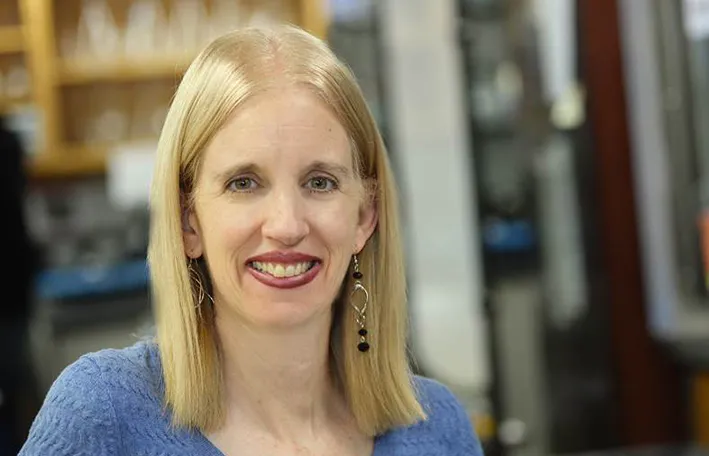
Dr. Alice Heicklen’s contributions to STEM education at Columbia stand out for reaching students at multiple stages of their undergraduate journey in the sciences. Director of Undergraduate Studies and Senior Lecturer of Biological Sciences at Columbia University, Heicklen teaches students just beginning their studies, works with them during their summer research experiences, and often gets to work with those same students in upper-level biology classes. Heicklen works with the other Intro Bio lecturers to set up students for success when they go from the classroom to doing research in a lab. “The Intro Bio experience is kind of unique at Columbia in that we really make them problem solve,” said Heicklen. “Once they've done that, they're really ready for the upper-level classes, but also to go into research labs.”
This year, for her outstanding contributions to educating the next generation of STEM experts, Heicklen received the Lenfest Distinguished Faculty Award. The award is given in recognition of “the excellence of Arts and Sciences faculty as teachers, scholars, and mentors within and outside the classroom,” and Dr. Heicklen was recognized for her “tireless support of undergraduate students in the Department of Biological Sciences through her innovative teaching and courses, leadership of the summer undergraduate research fellowship program, rigorous training of student teaching assistants, and broader efforts to build community within the biology major."
In addition to teaching to hundreds of Intro Bio students every year, Heicklen is the director of the Summer Undergraduate Research Fellowship (SURF) and Amgen Scholars Program, which challenges students to communicate their own science to a wide range of audiences. She works with Biological Sciences PhD students who lead a weekly science communication seminar for the SURF undergraduates. This weekly seminar focuses on communicating to audiences beyond the research lab. Heicklen encourages the graduate student leaders to introduce ideas for connecting with the general public. In the past few summers, the weekly seminars have dedicated time to practicing elevator pitches and looking at “Ask Science” reddit threads to learn what people beyond Columbia are curious to learn about STEM. Heicklen stresses how important this exercise is for budding scientists as “it helps students think about the importance of what they’re doing.”
Heicklen explains how contextualizing biology and learning how it relates to tangible issues is important for retaining students in the sciences. Speaking from her own experience learning biology, Heicklen said, “I didn't have a lot of context. I wasn't given nearly as many examples, so I didn't really see the big picture. I was busy memorizing as opposed to really thinking about what I was learning.” From guiding students navigating scientific publications, to teaching effective communication across a wide range of audiences, she remains committed to helping students explore the real-world applications and implications of biology.
“It’s wonderful to be recognized for all the work that I do within the department,” Heicklen said, “and to celebrate all of the things we do together to really make the undergraduate experience something special.”