
Sneaky Viruses, RNA-editing, and New Chapter for Dr. Erin Doherty, Who Joins the Faculty of Biological Sciences in 2027
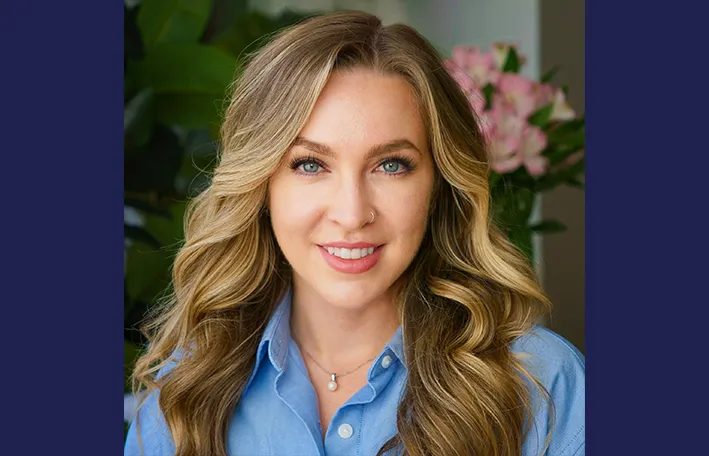
Viruses have mastered the art of hiding in plain sight, and Dr. Erin Doherty, who will be joining the Biological Sciences faculty in the new year, is setting up a new lab that will study just how they do it. We recently met Dr. Doherty to discuss her path to Columbia, her plans for her lab, and how viruses get past our immune systems.
In recent years, Doherty has become intimately familiar with RNA editing, the biological system that viruses hijack to sabotage the immune system. Our bodies know how to distinguish between our own RNA and foreign viral RNA so that we don’t destroy healthy cells during normal protein production. However, viruses have evolved mechanisms to exploit this system, suppressing our bodies’ immune response and tricking it into thinking viral RNA is safe, in a phenomenon known as viral antagonism. To understand this, we need to go back to the basics (biologically speaking): To make proteins, double stranded DNA in the nucleus (our genetic code) is unwound and transcribed into a single stranded copy called RNA. RNA acts as a messenger: it leaves the nucleus and enters the cytoplasm, where it is translated and eventually folded into functional proteins. Many viruses replicate through double stranded RNA, which sends an alert to our immune system to target and destroy the infected cells. However, viruses can then hijack our normal RNA editing systems to disguise themselves as non-pathogenic molecules and thus remain undetected. By exploring the mechanisms through which this phenomenon occurs, Doherty hopes to uncover the foundation of immune signaling, and provide further insight into therapeutic targets that may be developed to counteract viral infections.
Doherty’s love for science began, however, in her own backyard. Growing up on a small farm, Doherty was surrounded by fascinating flora and fauna to be explored. “I feel like it's almost a cliche of people who really get interested in studying the things in their backyard,” Doherty says. “I always loved frogs and lizards and snakes.” In high school, Doherty’s curiosity led her to ever smaller scales, from animals to the molecular building blocks from which they are formed. Through the International Baccalaureate program, she discovered her interests in organic chemistry, which she calls “the language [through which] biology speaks.” She entered graduate school with a keen interest in pursuing this field of research, particularly in the context of viruses and disease.
As a graduate student in Dr. Peter Beal’s lab at UC Davis, Doherty worked at the molecular level to developtherapeutic targets for disease and became more familiar with RNA. When changes occur in a DNA sequence, the proteins it encodes can malfunction or cease to be produced at all. In humans, this can lead to debilitating, life threatening genetic disorders, including cystic fibrosis and sickle cell disease. Researchers have looked to DNA editing as a potential therapeutic target. However, DNA-editing technology is controversial and comes with a lot of risks, since it relies on editing our only copy of that material. Doherty found a different way in. She developed techniques to instead target and edit RNA to correct the source of genetic disease. “We focused on this intermediate player so we can target the RNA as this kind of transient messenger instead of targeting at the DNA level,” said Doherty. “It’s a potentially safer alternative to gene editing based therapeutics that target DNA because RNA is transient.”
After studying RNA-editing therapies, and learning how our bodies spare endogenous RNA from being recognized as pathogens, Doherty transitioned into her postdoctoral work, expanding her focus to look at immune signaling more broadly in Dr. Jennifer Doudna’s lab at UC Berkeley. In 2020, Doudna received the Nobel prize for her discovery that the CRISPR-Cas9 system, a natural part of bacterial immune systems, can be used as a gene editing tool. In the Doudna lab, Doherty looked at how microbes defend themselves against pathogens, and found parallels in the evolution of immune response in higher order organisms. “We're actually able to better understand human immunity and eukaryotic immunity based on our understanding of these mechanisms that exist in prokaryotes,” said Doherty. Prokaryotes, including microbes, are simple, single-celled organisms lacking a nucleus or organelles. “I think that surprises a lot of folks.” Like higher order organisms, prokaryotes use second messengers called cyclic oligonucleotides as an “alarm signal” to trigger antiviral responses. By studying conserved immune response mechanisms in less complex organisms, Doherty hopes to better understand how viruses have evolved mechanisms to override them.
Now, Doherty brings her research program to Columbia University. In her new lab, Doherty will pursue the study of the mechanistic underpinnings of viral antagonism, combining the topics she explored in both her graduate and postdoctoral work. After spending her whole life on the West coast, the move to New York will be a big one. She is looking forward to exploring the resources available for structural biology and biochemistry on campus and in the broader New York area, such as the Columbia RNA Initiative. “I'm really excited to be a part of that scientific community. It seems to [have] a lot of support for interdisciplinary and collaborative work,” said Doherty. “Columbia was a clear choice for me.”
Throughout her scientific career, Doherty has been deeply aware of the importance of good mentorship in her development as a scientist and principal investigator. Building upon the wisdom she received from her own advisors, she has made it a priority to give back to the community by guiding trainees through the early steps of their scientific careers. “I've always had this kind of admiration for my academic mentors and that's gone a long way in helping me to realize that I wanted to stay in academia,” said Doherty. At Columbia, she will begin the process of graduate student recruitment this fall, presenting her research both at a first-year seminar and at our department retreat. The Biological Sciences community looks forward to welcoming Dr. Doherty when she officially begins at Columbia in January, 2027.