
Beyond the allure of living in New York City, “Columbia is a very diverse and very colorful school,” Fang says. “There are different groups of people and also many international students here.”
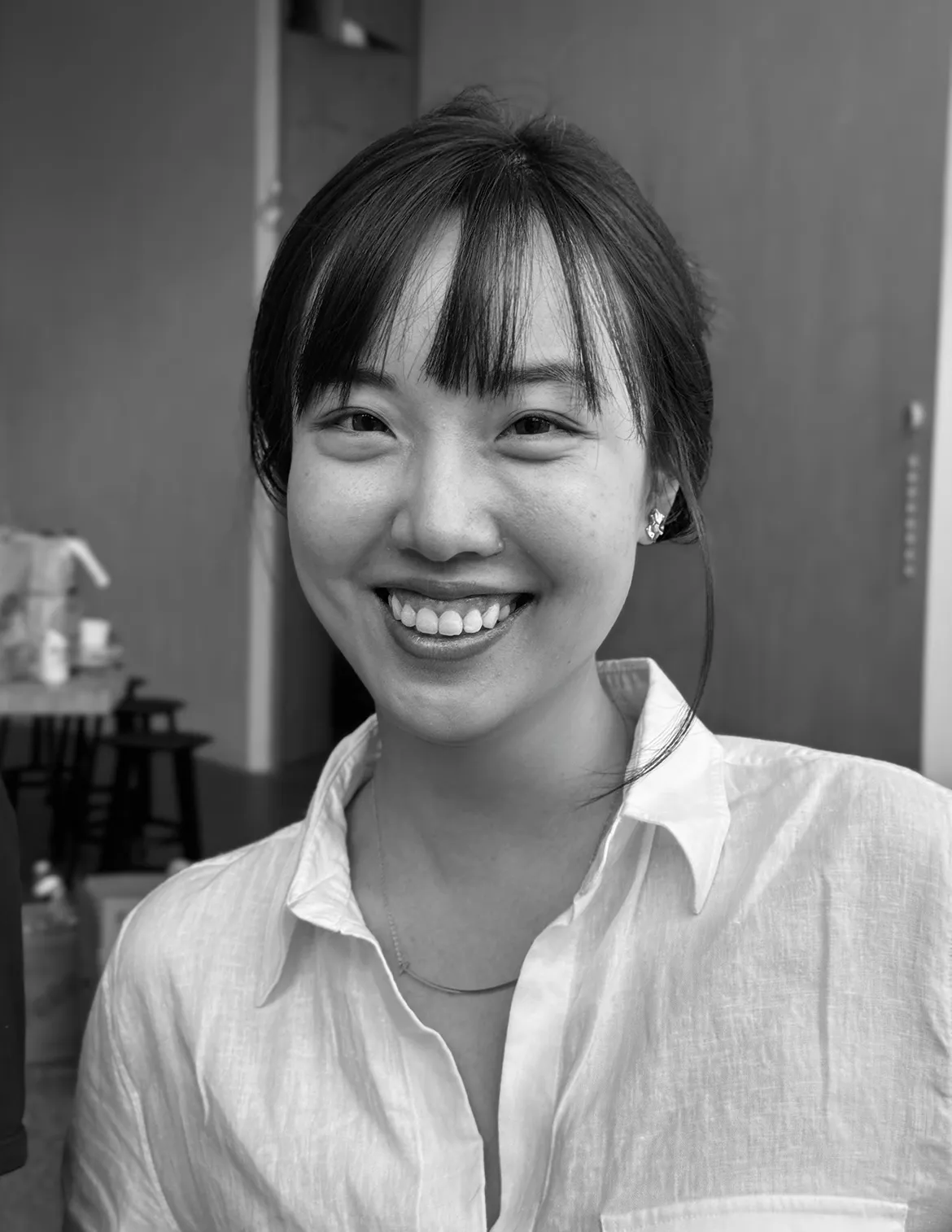
The recent Columbia graduate will apply her epigenetics knowledge as a postdoc at Mass General.
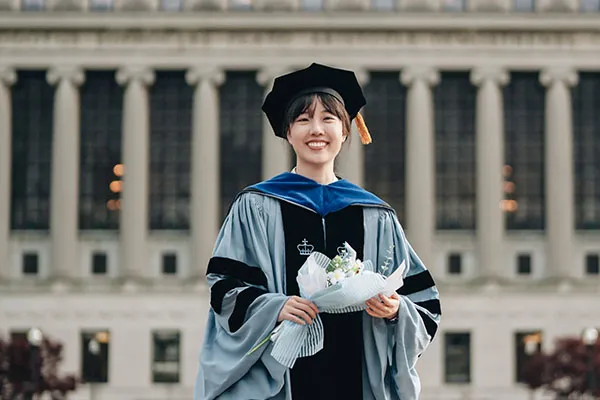
Dr. Yimeng Fang describes Chengdu, China—the capital of Sichuan—as “the hometown of pandas.” The city is home to the Chengdu Research Base of Giant Panda Breeding, a world-renowned conservation and research facility for giant and red pandas.
Growing up in Chengdu, Fang had an early love for these animals, which later led to an interest in biology. Fang completed her PhD studying epigenetics with the Columbia University Department of Biological Sciences in the spring of 2024. This past fall, she started a postdoc at Massachusetts General Hospital.
As an undergraduate, Fang majored in animal science with the goal of working with pandas. She attended China Agricultural University and Cornell University for a dual-degree program. “I got to live two different college lives: one in China and one in the US,” she says. She spent her first two years in Beijing and her latter two years in Ithaca, New York.
If she could go back in time, she would tell herself, “Take some time for yourself to really get the results, and don’t give up.”
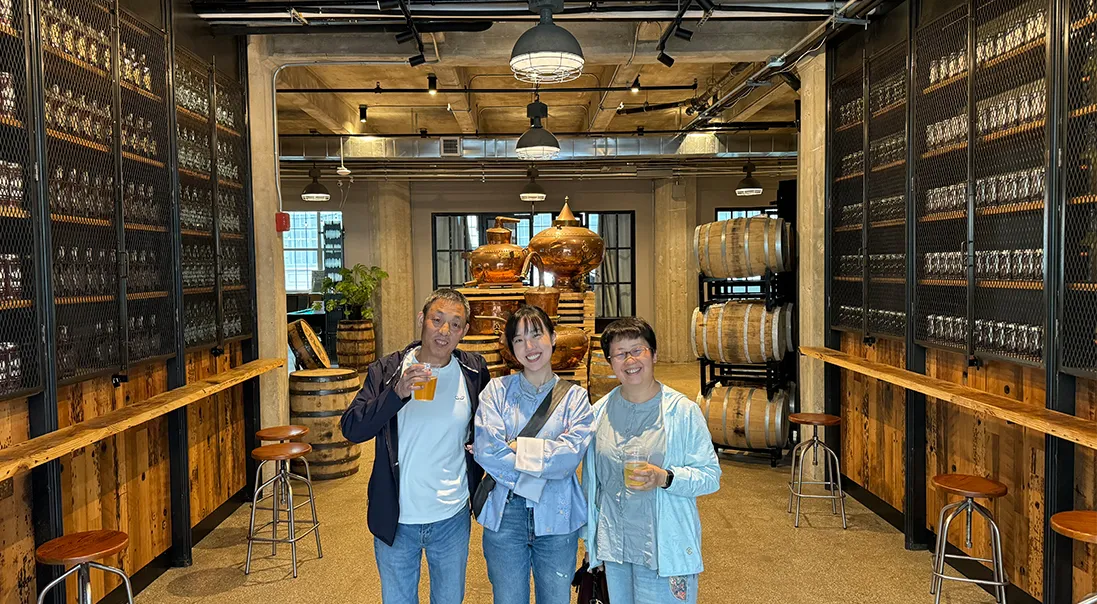
In the course of her studies, Fang realized that animal science focused more heavily on livestock than on wild animals such as pandas. So, when she arrived at Cornell, she decided to think smaller and joined Dr. Paula Cohen’s lab studying the cell-division process of meiosis in mice. The lab looked at how homologous chromosomes meet during meiosis and how recombination events are determined for each pair.
When Fang was new to the US and still learning the language, she met a PhD student named Carolyn Milano in the lab who supported and mentored her. Milano “was very patient and helpful in explaining details for me,” Fang says. “I really feel like she treated me like a younger sister.”
During her undergraduate research experience, Fang learned that she could pursue a PhD to continue with research and potentially start her own lab someday. She applied to a number of graduate schools in the US and eventually landed at Columbia. Beyond the allure of living in New York City, “Columbia is a very diverse and very colorful school,” Fang says. “There are different groups of people and also many international students here.”
When it came time to choose a lab, Fang knew she was interested in epigenetics. She found Dr. Songtao Jia’s lab to be a welcoming environment, and working there meant she could continue exploring the questions about genome stability that she had studied as an undergraduate.
Fang’s primary graduate work focused on how histone chaperones coordinate with one another and transfer parental histones. During DNA replication, parental histones are segregated at a replication fork—the Y-shaped structure where DNA replication takes place—in a process known as epigenetic inheritance.
Yeast store epigenetic information on parental histones as covalent modifications known as histone marks. These histone marks can regulate gene expression levels and chromatin status, serving as a switch for transcription or other machineries to read the DNA.
The lab needed a test to examine how parental histones are segregated at the replication fork. In collaboration with Zhiguo Zhang’s lab in the Department of Genetics and Development, Fang adapted a platform called eSPAN, a next-generation sequencing–based method that allows researchers to track this segregation at the molecular level.
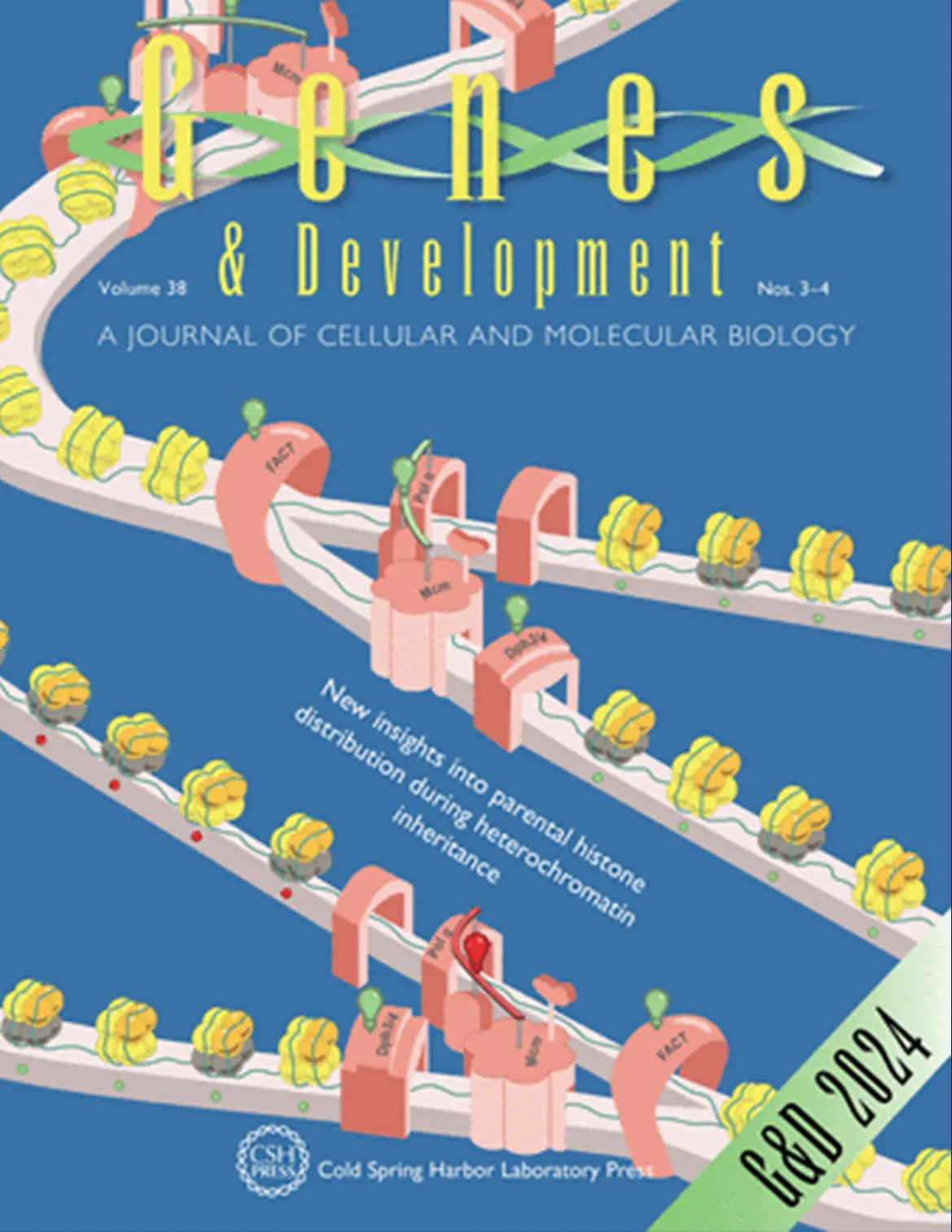
The group chose three different histone chaperones and applied the eSPAN method to characterize their functions. They also used reporter systems to see how mutating or deleting a gene might impact chromatin status. The resulting papers, published in Genes & Development in March 2024 and in Molecular Cell in September 2024, have more thoroughly characterized the parental histone segregation process.
The Genes & Development paper was even selected for the journal’s cover—an honor that younger Fang would have been pleased to know. She recalls feeling behind in her third and fourth years because many of her peers already had publications, and she didn’t know how she would catch up. If she could go back in time, she would tell herself, “Take some time for yourself to really get the results, and don’t give up.”
Throughout the course of her PhD, Fang forged close friendships with classmates in her lab as well as in the broader program. And she enjoyed the support of her research adviser.

Throughout the course of her PhD, Fang forged close friendships with classmates in her lab as well as in the broader program. And she enjoyed the support of her research adviser. “Songtao was very supportive of me, especially when I was trying to finish my PhD,” she says. “He was always open to discussions or talks, and not just about science. If I had a struggle in life, I could talk to him.”
After graduating, Fang took some time off to consider her future career plans. She would ultimately like to work with students, in part because of the mentorship she’s received from people like Milano and Jia. “That kind of relationship-building is really important to me, and I enjoy working with undergrads,” she says.
Fang recently started a postdoc in the lab of Dr. Miguel N. Rivera, a pathologist at Massachusetts General Hospital and Harvard Medical School. In the Rivera lab, Fang will use the basic, mechanistic perspective she developed during her PhD to study cancer mechanisms at the epigenetic level.
“I want to apply that knowledge by building more applications for patients or developing drugs that can really change something,” she says.
By Alexandra A. Taylor