
“I chose Columbia because it felt like the students were genuinely very invested in the success of all their peers and in the incoming years.”

Co-chairs Julie Dobkin and Lena Kogan reflect on using student input to enhance the grad school experience.

For students interested in shaping the future of the Columbia University Department of Biological Sciences, the Graduate Student Council offers a chance to do just that.
Graduate students elect representatives to the council in one- or two-year terms, and the council comprises representatives from each cohort Each year, the council has two co-chairs serving staggered two-year terms.
This year’s co-chairs are Lena Kogan and Julie Dobkin. Kogan is a third-year graduate student who works in Dr. Laura Duvall’s lab studying developmental arrest in mosquito eggs. Dobkin, a second-year graduate student, uses mouse and human stem cell models to study motor neuron differentiation in Dr. Hynek Wichterle’s lab.
Both were drawn to Columbia after observing what Dobkin calls a “collaborative and supportive” culture among the students. Kogan adds, “I chose Columbia because it felt like the students were genuinely very invested in the success of all their peers and in the incoming years.” Kogan and Dobkin see it as the council’s responsibility to support students academically and socially and to serve as a bridge between students and the department’s administration.
For example, “the council tries to create resources for students to have all the knowledge they can have going into their research career at Columbia,” Kogan explains. “There’s a lot of moving parts during your first year as a PhD student.” First-year graduate students at Columbia rotate through three labs, spending about three months in each lab before matching with the lab where they will complete their thesis work. Students will have varying expectations and levels of preparation for this experience, and the council works to level the playing field by providing resources, clarifying expectations, and connecting incoming students with students who are more experienced.
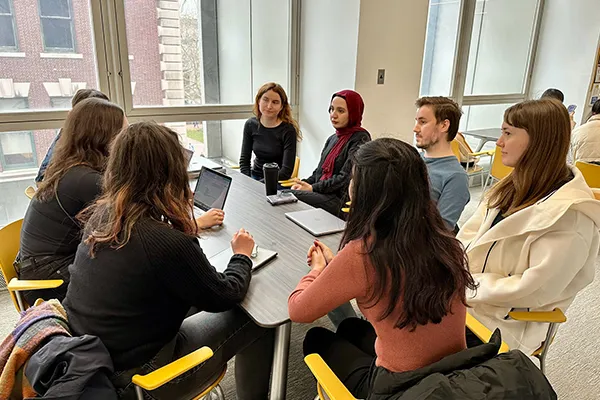
"If there's something that you care about having in the department, then council is the place that encourages and supports that and will connect you with people that will help you make these ideas or passions a reality."
Among her experiences on the council, Kogan says last year’s town hall stands out. “It was exciting to see so many students coming together and feeling involved together,” she says. The well-attended event provided an opportunity for students to bond, clear up misunderstandings, and brainstorm ways to evolve the department. “Talking about these things together on council and seeing everybody else caring about the department that way—I thought that was rewarding, and it made me feel optimistic,” she says.
“It was exciting to see a lot of people really enthusiastic about improving the department and voicing their concerns,” Dobkin adds. In the past years, feedback from the town hall has been incorporated into changing the course requirements to be more flexible, allowing students to tailor their course selection to their research needs.
The council also provides health and wellness resources, such as fielding health insurance questions, and ensures that students have enough opportunities to connect with one another socially. Kogan says representatives ask questions such as, How do people feel socially in the department? How happy are they? Do they feel like they have enough events or opportunities to get to know each other?
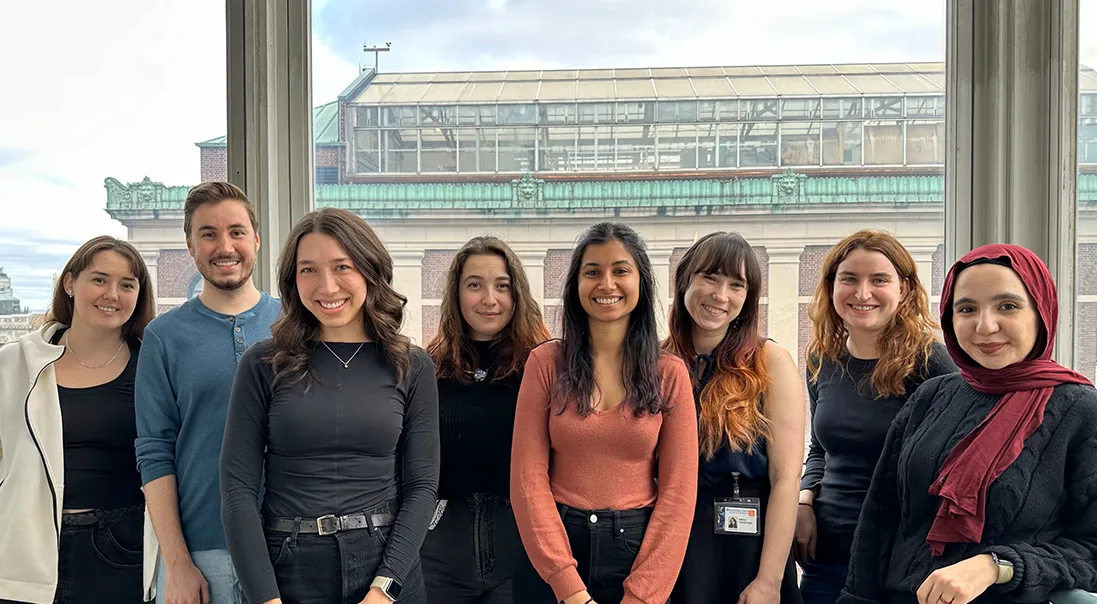
The council brings together “students that might not otherwise be connected to one another to have spaces and opportunities to talk and share their academic and research experiences,” Dobkin says.
Once per month, the council meets to discuss current aims and goings-on in the department. It publishes an annual digest of its activities and fields an annual survey to gather feedback from students across a range of categories. Each year in the spring, the council holds a town hall to share the survey results and talk through outstanding issues. The council can then take action, for example by communicating student needs to the Directors of Graduate Studies (DGS), promoting existing resources, or creating new resources. A few years back, the council worked with the DGSs to compile resources and advice for first year students’ onboarding into a single, easily accessible Quick Start Guide in the Graduate Student Handbook.
Although the academic demands of graduate school mean their free time is often limited, Kogan and Dobkin find serving on the council to be worth the effort. “I like when I can be part of organizing something that makes other people happy,” whether that’s making someone’s week better or facilitating a deeper connection with their cohort, Kogan says. “It's very fulfilling to be on council and just involved in the department in general.” She says hearing about people’s historical experiences helps her maintain a balanced view of challenges.
Serving on the council has helped Dobkin connect with students in the department across cohorts. She’s been able to share that experience with students in her own year and also push for events and programs that make it easier for everyone to connect.
Ultimately, Kogan says, “if there's something that you care about having in the department, then council is the place that encourages and supports that and will connect you with people that will help you make these ideas or passions a reality."
by Alexandra A. Taylor