
"Columbia was among the top choices. Location-wise, it's the best."
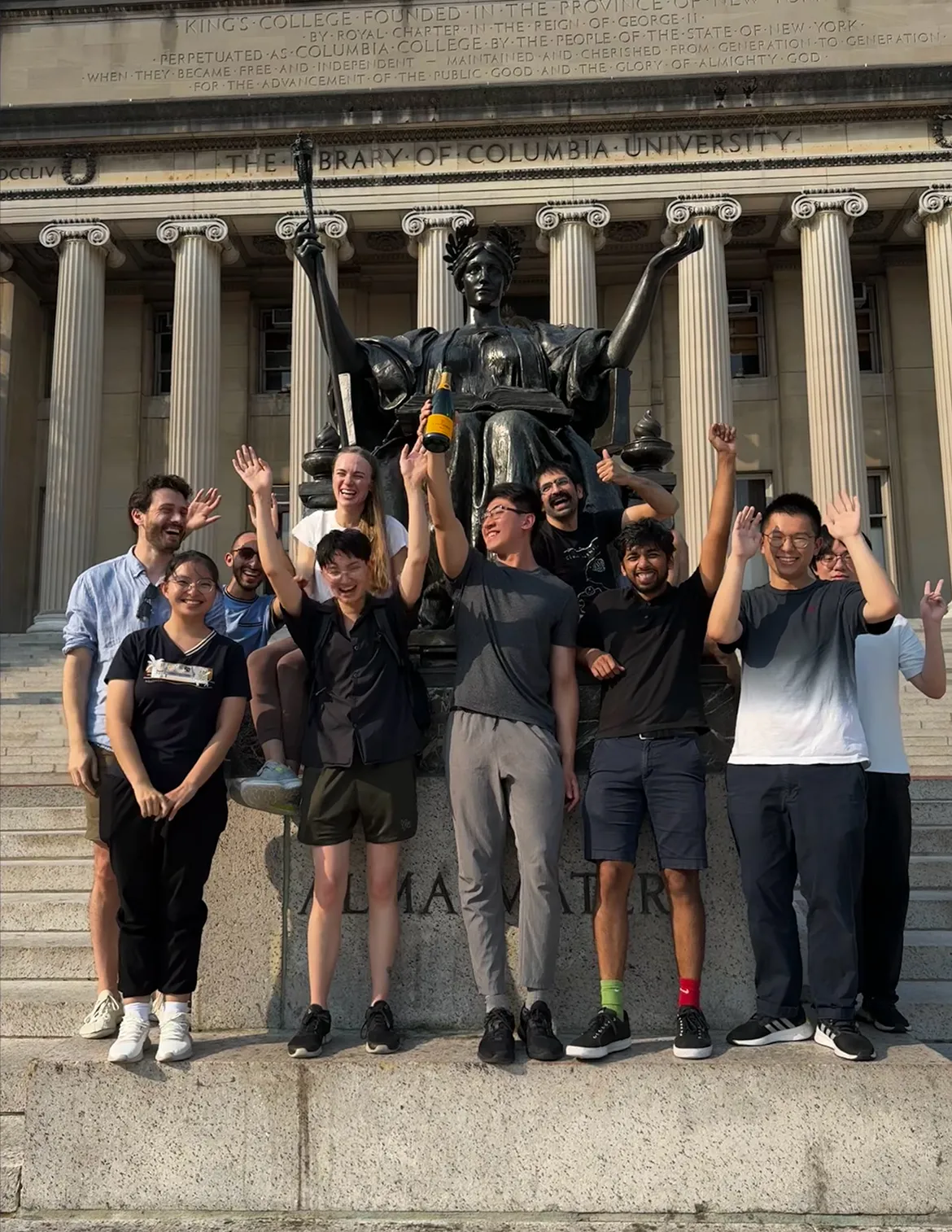
After developing a novel screening method, Gu hopes to translate technology to benefit patients.
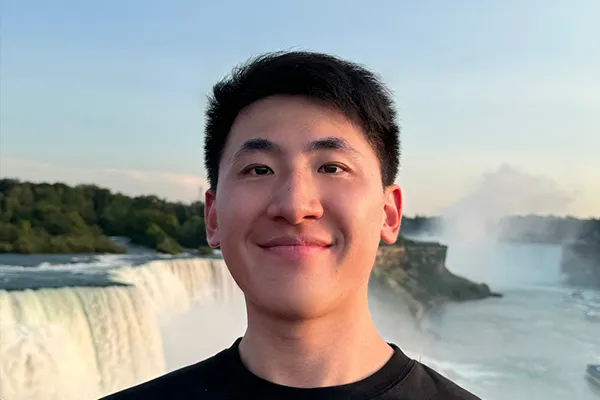
Where did you grow up, and how did you first get interested in science?
I was born in Shanghai, China, and my first exposure to science was in college at the University of Hong Kong. When I exchanged at UC Berkeley in my junior year, I took molecular biology and microbiology classes. The classes were quite different from what I was taking back home. They were very research-oriented, and the professors covered a lot of the latest research progress in the fields. I was very excited about how as an undergrad, I got exposed to that kind of state-of-the-art research. That's when I decided I wanted to apply to grad school, be a PhD student, and do my own research.
After graduating from the University of Hong Kong, you came to the Columbia University Department of Biology and eventually landed in the Gaublomme lab. What made that the best fit?
I applied to 10-ish PhD programs in the United States, and Columbia was among the top choices. Location-wise, it's the best. I like city life because I was born in Shanghai, and then I went to college in Hong Kong. Those are all big cities that are pretty similar to the culture of New York.
When I came to Columbia, Dr. Jellert Gaublomme’s lab was the first lab I rotated with. It was my first experience in being a PhD student in the United States, and Dr. Gaublomme offered me great help and guidance to help me fit in this role and then be accommodated with the lab culture and university culture. He offered me a lot of help to guide me through: How should I design a project? What experiments would I do? And we regularly discussed the results and how to optimize things.
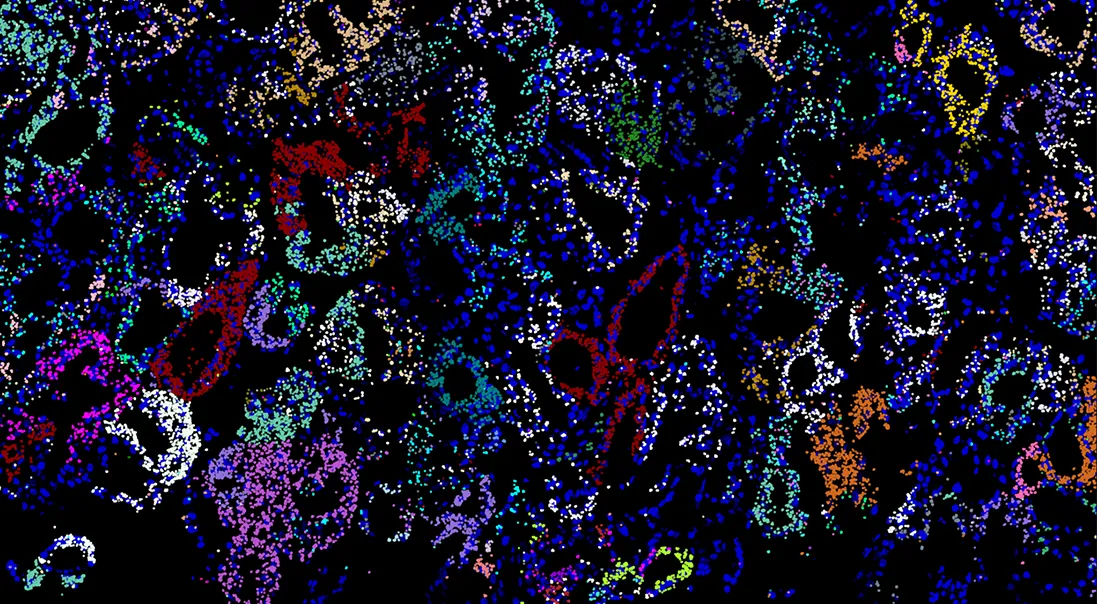
During these three months, I learned a lot from him, and I was also really interested in what he was developing. It was a spatial transcriptomics assay. After I joined his lab, I kept working on that assay, and we just published the paper in Nature Biotechnology.
"Dr. Gaublomme offered me great help and guidance to help me fit in this role and then be accommodated with the lab culture and university culture."
Could you walk me through that recent paper?
This project came from a brainstorming session with Jellert back in January 2021. We were just chatting: “Oh, we saw a paper doing optical pooled screens. That's pretty cool.” We were designing DNA detection oligos for in situ hybridization. We thought, why not try to combine our pilot data with this cool technology of optical pooled screens, so we can give each guide in the library a unique barcode that we can later read out with our design of in situ DNA hybridization? We put down some sketches on the whiteboard, and he said, “We can order some reagents, and why don't you just test it?”
I worked on the pilot experiments for several months, and it worked out really nicely. We saw beautiful barcode detection, and that proved the technical feasibility of this assay.
Then we started to build a real study. We designed experiments to measure the fidelity and sensitivity of our barcode detection. And we reached out to Dr. Alberto Ciccia’s lab at Columbia Medical Center to find a biological context that we could apply our method to. They were experts in DNA damage response and breast cancer. I'm pretty interested in cancer studies, so I immediately thought, that's a perfect fit for this method to be applied on.
So, then we tried to generate patient mutations on breast cancer cells in high throughput. We studied 360 mutations with our pooled optical screening method, and then we tried to apply different chemotherapeutic drugs or ionizing irradiation, typical therapies for breast cancer patients. We tried to apply these therapies onto the cells carrying those patient-derived mutations to see the treatment-specific responses.
We envision this work to serve as a platform for future personalized therapy or precision medicine. The goal is—if we can screen for, say, thousands of patient-derived mutations against an array of different cancer therapies—we will be able to tell which patient is more sensitive or resistant to a certain type of cancer therapy and use that information to guide personalized medicine.
What have you learned from this experience?
This paper was a long journey. It took us almost four years to go from sketches on a whiteboard to a real publication. Science is hard. There's a lot of back and forth. The project moved pretty smoothly at the beginning, when we were trying just to prove the technical feasibility, but then when we went into real biological systems, a lot of things happened, and I had to do multiple iterations of optimizations to make the assay work in that specific biological context.
I'm a big fan of technology development, but now I’ve also started to think about how I translate technologies to biological insights or therapies that can directly benefit the patients. There are still gaps between technology and its applications. In my future career, I will find more balance between tech development and the translation of technology—how to make it more accessible to labs or to patients.
Outside the lab, I understand you’re a fan of basketball. Do you play?
I was on the college basketball team when I was at University of Hong Kong. After I came to Columbia, I just basically played for fun, but I'm still a big fan of basketball. We have intramural sports basketball competitions, where I organized a team with some of my friends and played with other teams that are all Columbia students. Playing basketball offers me a good opportunity to get to know different people at Columbia: undergrads, master’s students, even postdocs and professors. It’s been a great platform to build those connections outside of the lab.
Where do you see yourself headed?
I'm currently seeking postdoc positions to build up my research skills further. My goal is to be an independent investigator in the future and to continue pursuing science. As long as I can do science, I’m happy.
By Alexandra A. Taylor